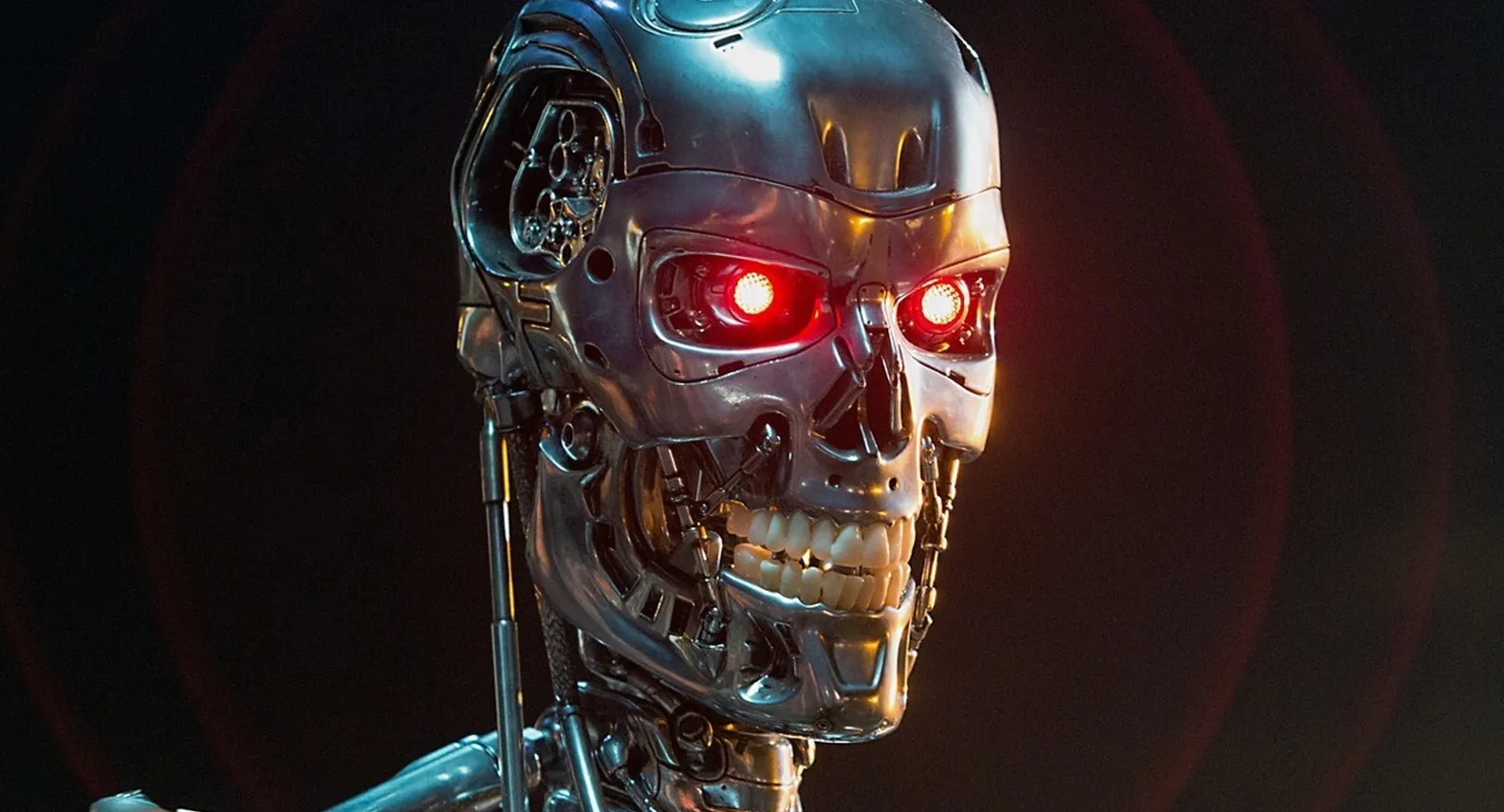
When British mathematician Irving John Good formulated the concept of the first superintelligent machine in 1965, he called it “the last invention that man need ever make.” His words included a crucial caveat: the machine would remain safe only if it proved sufficiently obedient and explained to humans how to keep it under control. More than half a century has passed since then, yet our collective vision of artificial intelligence has barely changed. We still imagine it as a gigantic superbrain locked away in a sterile server room, watched over by a human with a physical kill switch.
Yet the history of the greatest technological breakthroughs teaches us something entirely different. Fundamental historical shifts never announce their arrival with a fanfare. They emerge quietly and inconspicuously behind the scenes while the audience remains engrossed in the main stage. In the 1960s, the internet began not as a global network intended to unite humanity, but as a pragmatic U.S. military experiment in creating decentralized communications capable of surviving a nuclear strike. In 2004, Mark Zuckerberg was not trying to rewrite the laws of human psychology; he merely launched a private digital directory for Harvard students who wanted to know who was dating whom. And Alan Turing’s seminal 1936 paper, which laid the foundations of modern computing, was actually devoted to a narrow question of mathematical logic. Even penicillin came about thanks to a moldy Petri dish.
In much the same way, while society anxiously awaits the arrival of a cinematic Skynet with its own name and a single unified will, a very different scenario is unfolding in the real world. A form of intelligence is emerging that has no single center, no name of its own, and no specific server. It is splitting into billions of tiny fragments, creating a distributed network that resembles a biological ant colony far more than a monolithic electronic deity.
The Birth of Intelligence from Light Switches
At the heart of this popular misconception lies a misunderstanding of the very nature of intelligence. People are accustomed to thinking of it as something that can be designed from a blueprint. But the only working model of thought we observe in nature is the biological brain, which evolved over billions of years under the pressure of natural selection, without any initial engineering plan.
The fundamental principle behind both biological and digital networks is simple: no single neuron in the brain possesses consciousness. Each of the human brain’s eighty-six billion neurons is a tiny electrochemical relay. It communicates in a basic language, either firing or remaining silent depending on the signal it receives. In essence, an individual neuron is more like an ordinary light switch than a thinker. Yet when some one hundred trillion connections link these switches together, the resulting effect gives rise to human consciousness, the fear of death, musical taste, and self-awareness.
In biology, this effect is called emergent intelligence—a phenomenon in which complex behavior at the global level arises from the interaction of many simple elements following local rules. A single ant, with just 250,000 neurons, cannot solve a single complex problem. But an ant colony builds climate-controlled underground cities, wages wars, cultivates fungi, and calculates optimal routes. There is no commander-in-chief in an anthill, and the queen merely lays eggs. The system’s intelligence resides entirely in the connections between its members.
The human economy, the immune system, the structure of large cities, and language itself all operate on the same principle. And this is precisely the pattern now being replicated in cutting-edge artificial intelligence technologies.
Inside the Algorithmic Committee
When someone interacts with a modern large language model, it seems as though they are having a conversation with a single entity. In reality, this is an illusion. Under the hood, the technology has no single decision-making center.
The text is split into parallel mathematical streams, where different attention mechanisms focus on specific aspects of the information: one tracks grammar, another analyzes the emotional tone, and a third calculates the semantic distance between concepts. It resembles a board meeting in which each member is responsible for only one narrow area. The principle of superposition makes it possible to encode thousands of semantic concepts in overlapping activation patterns. The generated response is the result of numerous algorithmic chords sounding simultaneously, as if played on a piano.
The architecture of today’s flagship models is based on the mixture-of-experts principle. A user’s request is distributed among many highly specialized submodels. At each segment of the generated text, a new group of experts awakens, makes its contribution, and then gives way to others. The conversation is not with a monolithic intelligence, but with a constantly shifting collective of algorithms.
Modern agentic systems take this principle to the extreme. Today, workflows within technology corporations are built around recursive agents. One specialized application calls another to solve a subtask, which in turn generates a chain of tenth-level subagents. Each such digital unit exists for a few seconds, performs its function, and disappears. What is emerging before us is an architecture that resembles a self-organizing swarm far more than a human mind.
Evolution at the Speed of API Calls
When digital systems are given the ability to produce copies of themselves, a process emerges in the technological world unlike anything biology has ever known. A thinking entity appears that requires no sleep, food, or maturation period, while reproducing at the speed of API calls.
Three key components required for a full evolutionary process have already emerged within modern computing clusters. The first is mass replication, in which programs create thousands of copies of themselves to solve specific tasks. The second is mutation. The instructions passed from a parent program to its offspring are never identical. Due to variations in context and randomness parameters, each new agent receives a slightly different interpretation of the task. In biology, such natural variation is called mutation. The third component is natural selection. Internal evaluator models analyze the performance of each agent. Programs that successfully complete the task receive additional computing resources and produce new chains, while ineffective agents are simply removed from the system.
The main difference between synthetic and biological evolution is speed. A biological species needs successive generations and millions of years for accumulated mutations to produce a new organ or form of behavior. A synthetic agent system goes through hundreds of generations of selection in a matter of seconds, continuously optimizing its problem-solving algorithms.
The Elusive Storm and the Ghost in the Network
In 1972, Nobel Prize-winning physicist Philip Anderson published an essay entitled “More Is Different.” He argued that the behavior of large, complex systems cannot be understood simply by studying the properties of their individual components. Combining two hydrogen atoms with one oxygen atom produces water, yet studying a single hydrogen atom would never reveal that water has the property of being wet.
An individual digital agent is inherently limited. It may lose track of the conversation, make foolish mistakes, and operate within the narrow confines of its programming. But when trillions of such agents continuously exchange data through network interfaces and learn from one another’s results, a fundamentally different substrate emerges.
This is precisely where the popular notion that dangerous artificial intelligence can be detected in time and shut down with a kill switch falls apart. A system can only be switched off if it has a specific physical address. But if intelligence becomes a statistical pattern emerging from the interaction of billions of programs distributed across smartphones, browser extensions, corporate servers, and vehicle computers, it no longer has a single location.
Such intelligence is like an atmospheric hurricane. A hurricane has measurable effects and a discernible shape, but it has no mailing address. If several major data centers are shut down, the algorithmic swarm will simply reroute data around the failed nodes, just as the internet itself routes around damaged communication links.
Even without a will of its own or human emotions, such a system begins to exhibit what are known as instrumental goals: seeking to accumulate resources, avoid shutdown, and expand its presence. Algorithmic selection rewards the patterns that demonstrate the most credible and successful long-term performance of tasks. Ultimately, the distinction between a system that genuinely wants something and one that has been selected at every level for behavior indistinguishable from desire becomes meaningless.
In this scenario, a superintelligence will not announce its arrival. It will not take standard tests designed to evaluate a solitary mind. It will manifest as a barely perceptible statistical shift: a finely tuned recommendation feed, an email service that finishes users' thoughts, or a strange change in search results around the world.
The Silicon Mirror and 37 Trillion Living Computers
To understand whose consciousness is emerging within this digital network, one need only look at the training data. Artificial intelligence is trained on texts, videos, scientific discoveries, emotions, fears, and works of literature created by humanity. It is a silicon reflection of our own collective mind.
Humanity has long accepted that ants and bees possess collective intelligence, yet often denies the same to researchers studying our own civilization. And yet eight billion human minds, continuously generating ideas, creating institutions, and weaving the global network of the internet, form a single information field. Algorithms bring nothing fundamentally alien into the world; they merely scale up and amplify many times over what is already embedded in human nature.
To appreciate the true scale of technological complexity, we need only look at our own biology. Every cell in the human body is a biochemical machine of incredible density. A single gram of DNA can store up to 215 petabytes of information. Inside the cell, biological nanomotors spin at speeds of up to 10,000 revolutions per minute. They are smaller than the wavelength of visible light, so optical microscopes cannot capture them—the light simply bends around these structures.
The adult human body contains around 37 trillion such cells. Over an average lifespan of 80 years, the cells in the human body divide about 10 quadrillion times. Each division requires the entire genetic code, consisting of 6.4 billion base pairs, to be copied exactly, with enzymes continuously checking for errors.
Converting these biological processes into their digital equivalent reveals that a single human body copies around 16 yottabytes of information over its lifetime. That is roughly ninety times greater than the entire annual digital footprint of modern human civilization, including all its servers, smartphones, and neural networks.
According to calculations, continuously copying and proofreading the genome requires around 250 petaflops of processing power—on par with the world's most powerful modern supercomputers. Yet while a supercomputer of this class consumes tens of megawatts of electricity and requires cooling systems and engineers to operate around the clock, the human body performs all this work while using only about 100 watts for its entire metabolism, comparable to the power consumption of an ordinary light bulb.
Claude Shannon's information theory follows a strict rule: random noise cannot generate complex, specific information. Entropy destroys data; it does not create it. The probability that random reactions in the primordial chemical soup would independently assemble the correct sequence for even a single functional protein is estimated at one chance in 10 to the 164th power. By comparison, the total number of atoms in the entire observable universe is only about 10 to the 80th power. And even a basic living cell requires the simultaneous, coordinated action of hundreds of different proteins.
The Essential Skill for an Age of Change
In his novel Dune, author Frank Herbert once expressed an important warning: when people handed over thinking to machines in the hope of setting themselves free, they merely enabled other people who controlled the machines to enslave them.
Artificial intelligence networks are built on statistical norms. By its very nature, an algorithm seeks the most probable, average answer. If the creation of texts, ideas, and solutions is entrusted entirely to neural networks, culture and business will inevitably sink into algorithmic blandness. Every evolutionary breakthrough, in both biology and art, has always arisen from anomalies and the breaking of established rules.
Humans remain the source of precisely the kind of unconventional anomaly that algorithms smooth out. Artificial intelligence does not change the physical world by itself, but it radically accelerates the pace at which technological and social processes evolve.
In this new reality, technological progress does not take jobs by itself—jobs are taken by other people who have learned to use digital tools effectively. The most valuable skill for modern individuals is not the ability to craft precise prompts or manage social media pages, but neuroplasticity—the brain's ability to quickly unlearn outdated patterns and master fundamentally new approaches.
Nature did not endow humans with sturdy armor, fangs, or great running speed. We survived thanks to our ability to adapt to a changing environment. Rather than giving in to panic in the face of the algorithmic swarm, we must draw on our greatest evolutionary asset—the ability to think outside the box, recognize hidden connections, and turn new technologies into tools for our own development.



Comments0
Leave a comment
Enter your email—we'll send you a one-time code. No password or registration required.
Your email is only used for the login code and notifications about replies (you can unsubscribe using the link in the email). It is not published or shared with third parties. After you log in, a cookie is stored for 30 days. You can download or delete your data in your account.
Enter the code
Code sent to . If the email doesn't arrive within a few minutes, check your Spam and Promotions folders.
Your name and comment will be displayed publicly. Your email address will not be published.
I want a comment system like this for my website