
With the widespread adoption of generative neural networks, educational institutions, media outlets, and corporations have faced a systemic challenge: how to determine whether a text was written by a human or a machine. In response, an industry of automated detectors has emerged, promising to identify the “neural network fingerprint.” However, as research and court cases have shown, blind faith in these tools has created a paradoxical situation: honest authors and students with polished writing styles now face the risk of false accusations.
How detectors work and why they make mistakes
Most popular detection services function as statistical classifiers. They assess text not by its depth of meaning, but by two mathematical metrics:
- Perplexity — the predictability of a sequence of words.
- Burstiness — the degree of uniformity in sentence length and structure.
What is the paradox? The algorithms assume that humans write emotionally and unevenly, with natural imperfections. When an author produces high-quality, rigorously structured text in an academic or bureaucratic style, detectors register low perplexity and flag it as AI-generated.
Известны случаи, когда детекторы квалифицировали текст Декларации независимости США 1776 года как сгенерированный ИИ с вероятностью 99,99% из-за его строгого и предсказуемого синтаксиса.
Independent studies (including publications in Nature and data from Stanford University) identify the following issues:
- The average accuracy of most text detectors often does not exceed 73–80%.
- For authors who are not native English speakers, the false-positive rate reaches 61%, as they tend to use rigid, memorized formulas and formulaic sentence structures.
Overview of Leading Detection Services
Several major platforms used in academic and corporate settings stand out in the market:
- Turnitin — one of the world's most widely used academic plagiarism detection services, with an integrated AI detection module. Despite the low error rate claimed by its developers, independent tests regularly reveal failures.
- GPTZero — a popular online tool that evaluates text perplexity and structure to determine the likelihood of machine-generated content.
- Originality.ai — a commercial platform aimed at web publishers and academia that provides detailed reports on the likelihood of AI-generated content.
- Pangram — a specialized text analysis service based on statistical analysis of linguistic parameters.
- Antiplagiat («Антиплагиат.ВУЗ») — the primary text-checking system used in Russian-language education. In 2026, its developers acknowledged the need to account for the high quality of student papers when assessing the risk of false positives.
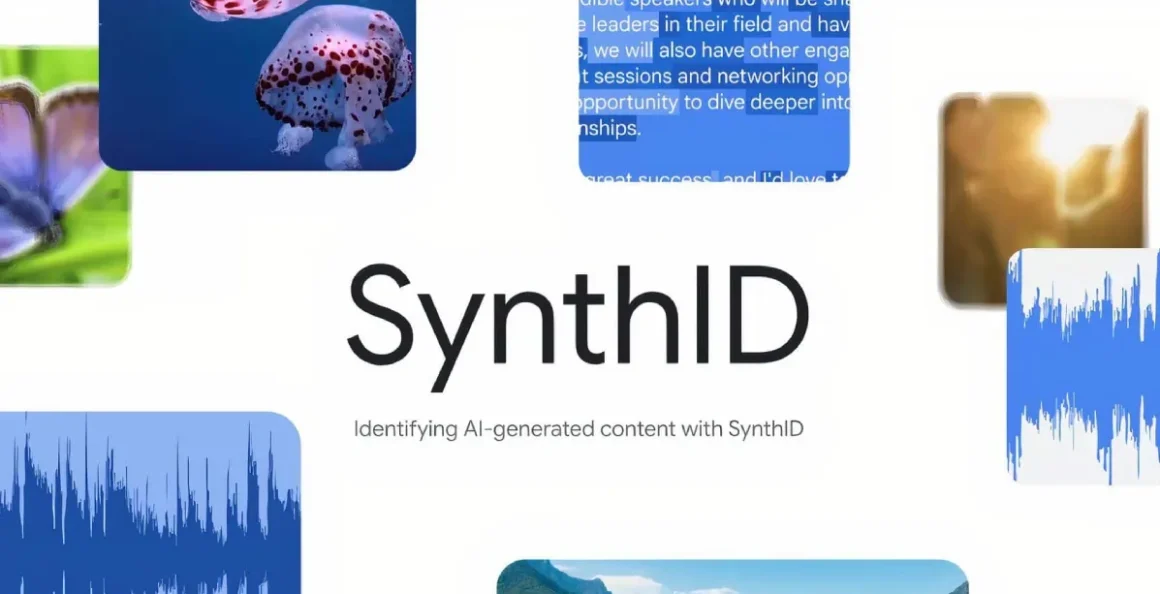
- SynthID Detector (by Google) — a free web service for detecting digital watermarks embedded in media content and text generated by Google and partner models.
Education Regulations and Case Law
Rather than banning neural networks outright, regulators and universities are moving toward regulating the conditions under which they may be used:
Thresholds and Disclosures at Universities: Universities set limits on the permitted amount of AI-generated content. Universities’ internal regulations specify maximum values: for example, no more than 15% AI-generated text for bachelor’s and specialist degree programs and no more than 10% for master’s degree programs. When using AI, students must attach to their work an “AI Use Declaration” specifying the particular neural networks used and the purposes for which they were used. In academic research and dissertations (particularly under the rules in Kazakhstan), AI may only be used as an auxiliary tool (for example, to process questionnaires or Big Data) and requires the prior written approval of the supervisor and the ethics committee.
Case Law: The judicial system (including Resolution No. 15 of the Plenum of the Supreme Court of the Russian Federation dated May 21, 2026, and Article 9 of the Arbitration Procedure Code of the Russian Federation) is guided by the following principle: the person who used the tool is always responsible for the outcome. Claims that an error or fabricated quotation was generated by a neural network do not absolve users of liability and may result in court-imposed fines. At the same time, chatbot responses themselves are not recognized by courts as admissible evidence.
A Paradigm Shift: From Text Analysis to Process Analysis
Attempts to detect neural network use by simply scanning the final text have reached a dead end due to the emergence of “humanizers”—services that paraphrase generated text and reduce detector accuracy to virtually zero.
This is prompting a shift toward analyzing the document creation process:
- Version and Revision History: Systems (such as “Antiplagiat 2.0”) and experts analyze the step-by-step revision history in Google Docs or Word (typing patterns, the timing of revisions, and editing).
- Protecting Authorship: Inserting large blocks of text all at once raises suspicions, whereas preserving intermediate drafts and outlines provides the main evidence that the work was completed independently.
Practical Checklist for Authors
- Keep a revision history. Write your work in online editors that record versions every second, and save intermediate drafts.
- Vary your rhythm and syntax. Alternate long sentences with short ones, use introductory phrases, and avoid monotonous bureaucratic language.
- Add unique context. Include specific, narrowly focused examples, personal experience, and regional data that an AI model cannot simply make up.
- Disclose your use of AI. If an AI model was used for editing or structuring, explicitly disclose this and describe the methodology.



Comments0
Leave a comment
Enter your email—we'll send you a one-time code. No password or registration required.
Your email is only used for the login code and notifications about replies (you can unsubscribe using the link in the email). It is not published or shared with third parties. After you log in, a cookie is stored for 30 days. You can download or delete your data in your account.
Enter the code
Code sent to . If the email doesn't arrive within a few minutes, check your Spam and Promotions folders.
Your name and comment will be displayed publicly. Your email address will not be published.
I want a comment system like this for my website