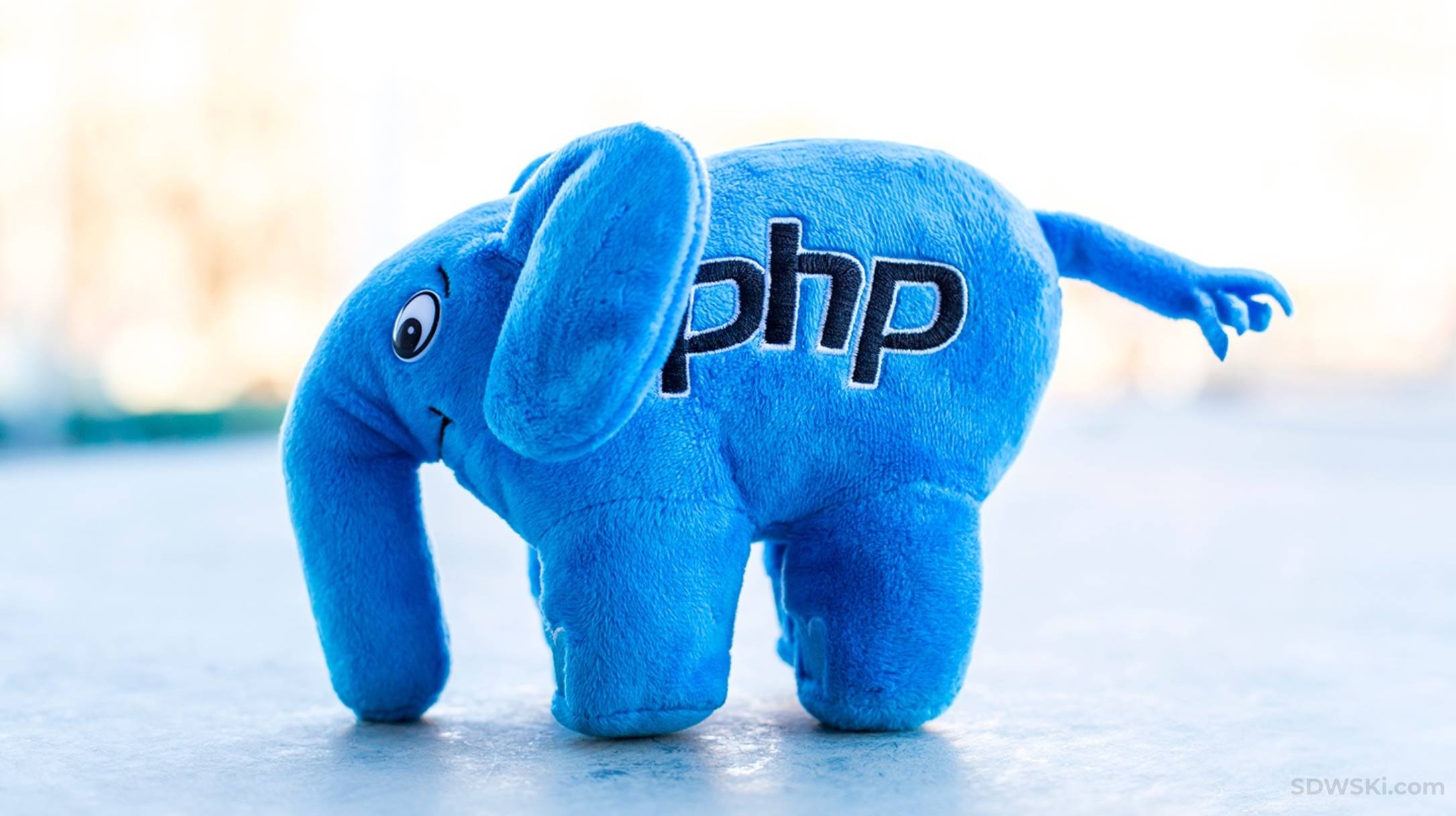
While Europe pours millions of dollars in grants into promoting democracy in third countries, as well as into useless projects, the PHP Foundation, a nonprofit organization dedicated to supporting and safeguarding the PHP programming language, operates with a severe shortage of funds and an extremely small team. The foundation is taking this step amid a major security crisis triggered by the recent discovery of critical vulnerabilities in the language.
We have grown accustomed to viewing the World Wide Web with the utilitarian rationality characteristic of our time, treating the digital realm as an unquestioned good that should function without interruption, generate profits, and entertain us.
Within this mindset, frameworks and programming languages have come to be seen as something like free air or public utilities that no one wants to pay for. Much as the pragmatic man in the street tries to reduce centuries-old institutions to a set of useful instructions for personal gain, the corporate world treats open-source code as an infinite resource that keeps the digital economy healthy at no cost whatsoever to its users.
The reality, however, has proved far more dramatic. The PHP Foundation, the nonprofit organization underpinning the server side of nearly seventy percent of all websites on the planet, has officially announced that it is catastrophically underfunded.
It turns out that the organization has exactly one full-time employee—Executive Director Elizabeth Barron—while all the remaining work is done by a small group of fourteen part-time contractors.
It was this tiny team that proved to be the only barrier standing against global chaos when two critical vulnerabilities known as PHP2Shell were discovered in the language's code in October 2026. The flaws, identified as CVE-2026-109618 and CVE-2026-109619, triggered millions of automated attacks and forced governments to hastily take vulnerable resources offline.
Herein lies the fundamental deceit of our digital civilization. We build gleaming skyscrapers of artificial intelligence and virtual reality, yet make a single foundation support seventy percent of the world's web in exchange for purely token donations. We want to reap the fruits of other people's labor without investing either genuine responsibility or commensurate resources, all while sincerely wondering why the foundation is beginning to crack at the seams.
And no matter how much corporations may argue about the merits of each new technological era, one truth remains. If the IT industry does not learn to preserve and fund its foundational institutions, all those grand supercomputers and AI partners risk one day being left without even the most basic functioning web server.




Comments0
Leave a comment
Enter your email—we'll send you a one-time code. No password or registration required.
Your email is only used for the login code and notifications about replies (you can unsubscribe using the link in the email). It is not published or shared with third parties. After you log in, a cookie is stored for 30 days. You can download or delete your data in your account.
Enter the code
Code sent to . If the email doesn't arrive within a few minutes, check your Spam and Promotions folders.
Your name and comment will be displayed publicly. Your email address will not be published.
I want a comment system like this for my website